AUDITORIUM INTERIOR About
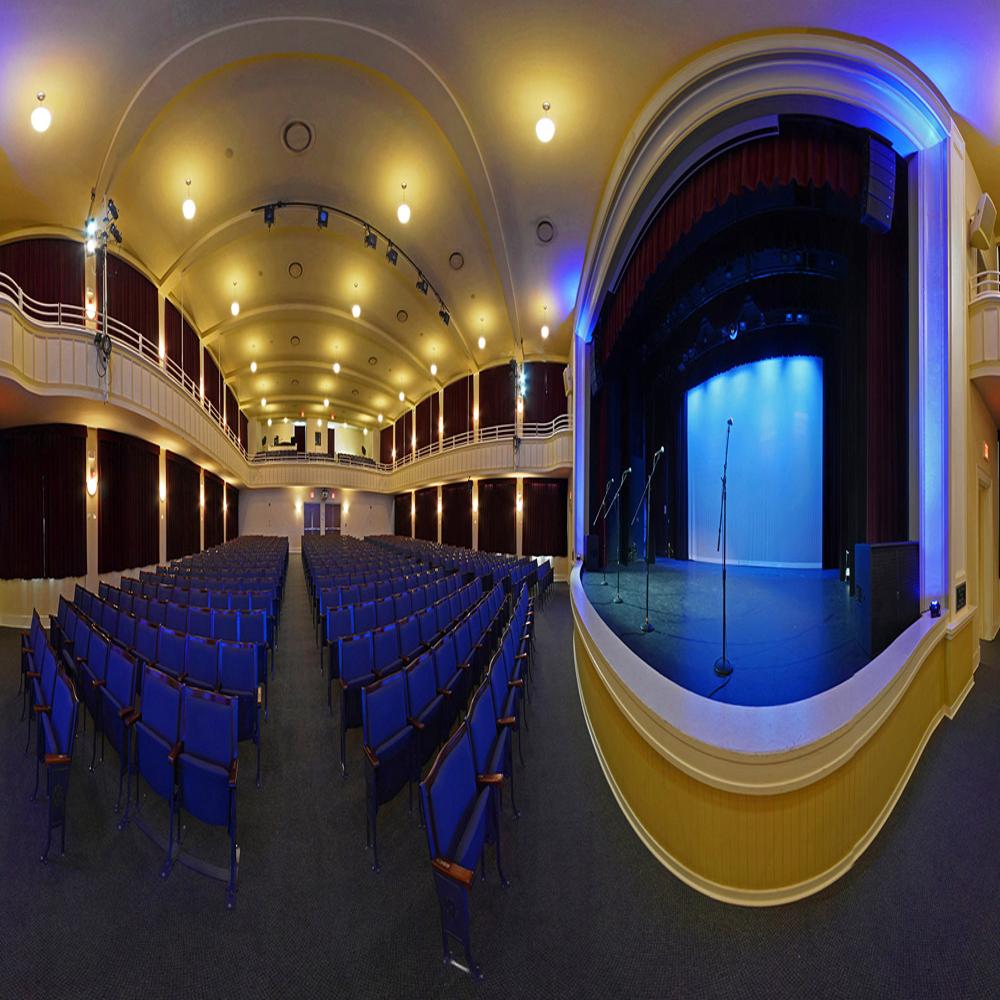
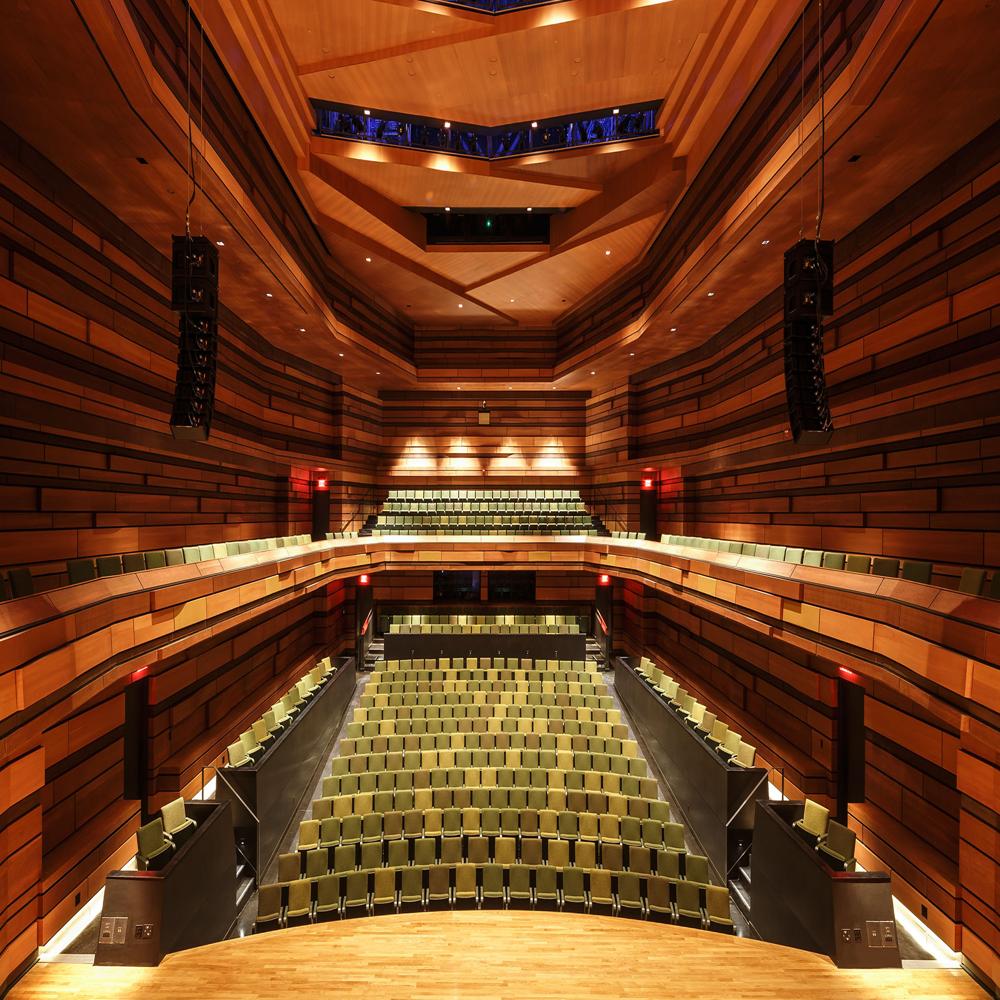
Designing an auditorium interior is a sophisticated balance of acoustic engineering, sightline optimization, and aesthetic appeal. Because these spaces serve diverse functionsfrom lectures to orchestral performancesthe interior must be both versatile and highly specialized.
Here is a full breakdown of the core elements that define auditorium interiors:
1. Acoustic Treatment
Acoustics are the most critical aspect of the design. The goal is to manage sound reflection and absorption to ensure clarity without echo.
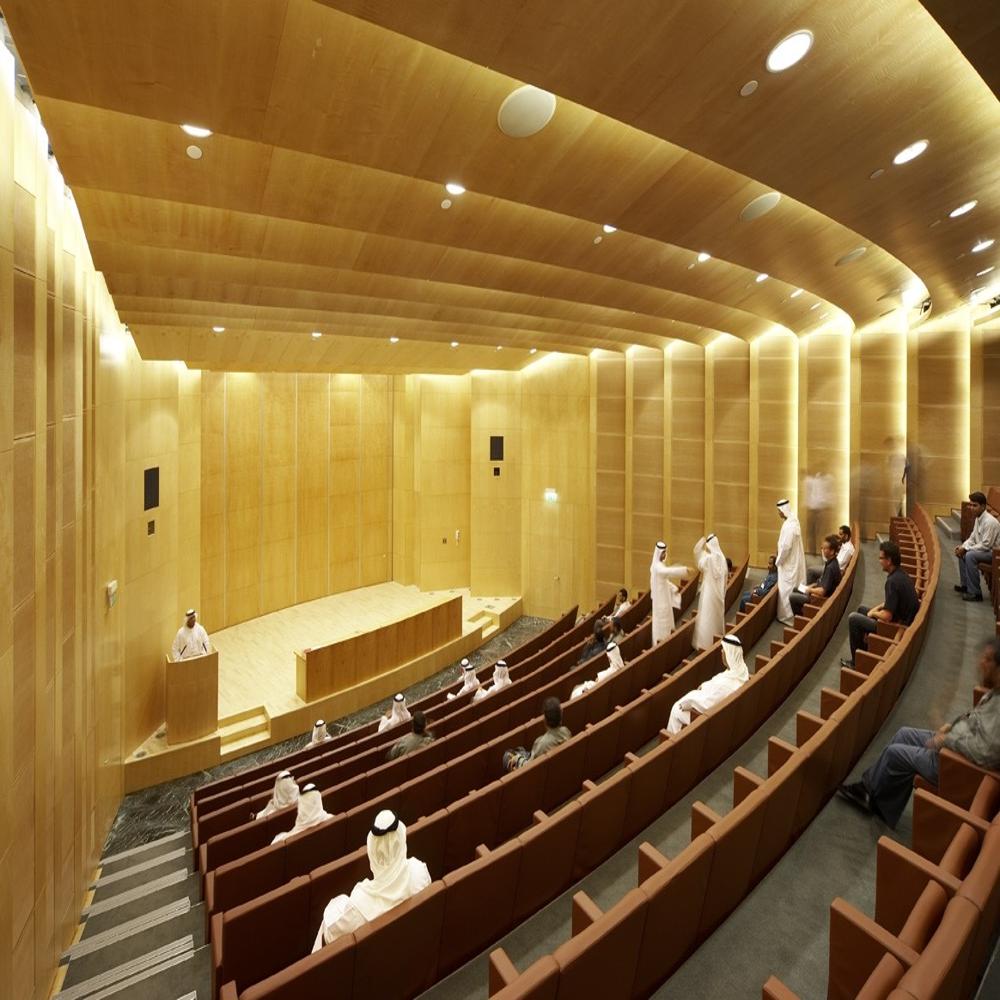
* Reflectors: Hard surfaces (often wood or specialized plastic) are placed on the ceiling and walls to bounce sound toward the back of the room.
* Absorbers: Fabric panels, acoustic foam, or perforated metal panels are used on the rear walls to prevent "slap-back" echoes.
* Diffusers: These irregular surfaces scatter sound energy, preventing "dead spots" and creating a rich, immersive sound environment.
2. Seating and Layout
The arrangement of the audience dictates the energy and visibility of the space.
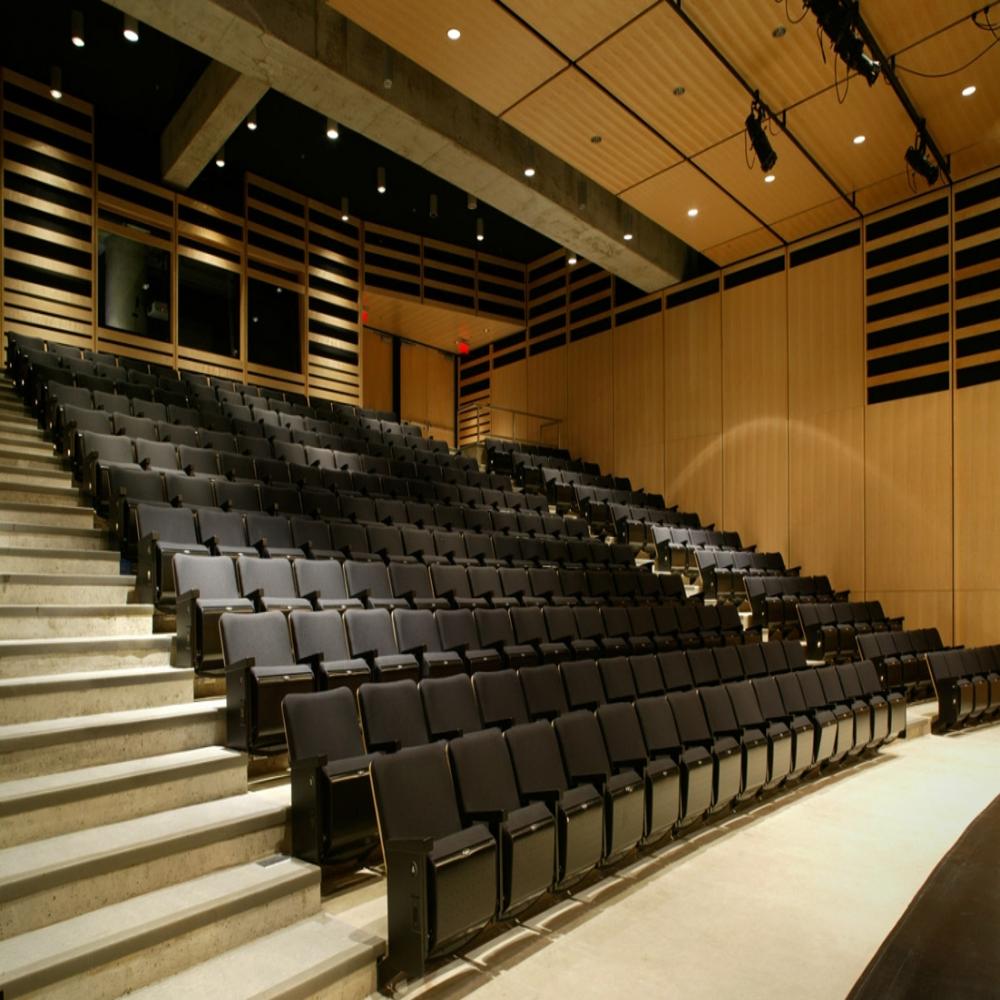
* Staggered Seating: Seats are offset so that a person in one row isn't looking directly at the back of the head of the person in front.
* Raked Floors: A gradual incline (stadium seating) ensures every guest has a clear line of sight to the stage.
* Continental vs. Multiple-Aisle: Continental layouts have long rows with aisles only at the ends, while multiple-aisle layouts include vertical aisles to break up the seating block.
3. Ceiling and Lighting Systems
The ceiling is often a complex "technical cloud" that houses vital infrastructure.
* Catwalks: Hidden walkways above the ceiling allow technicians to adjust lights and speakers.
* Ambient Lighting: Dimmable LED house lights that can be controlled from a central booth.
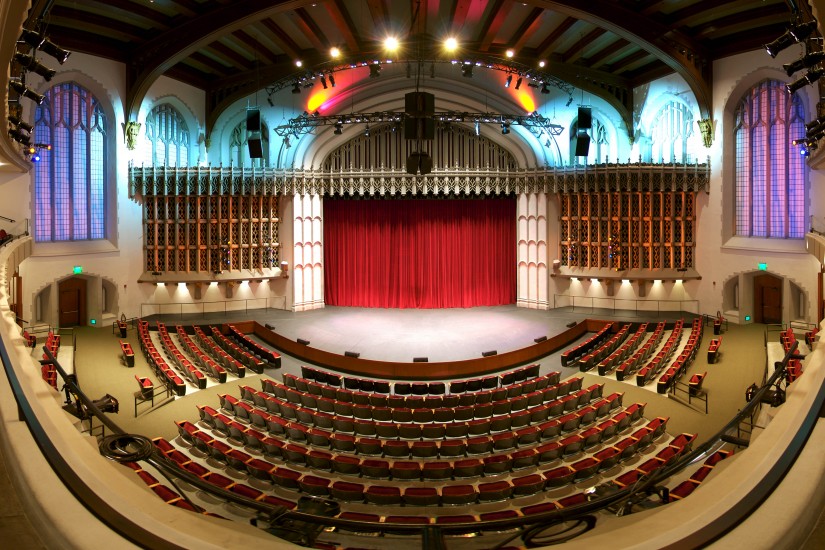
* Stage Lighting: Specialized fixtures (spotlights, wash lights) mounted on bars or "rigging" to illuminate the performance area.
4. Stage and Proscenium
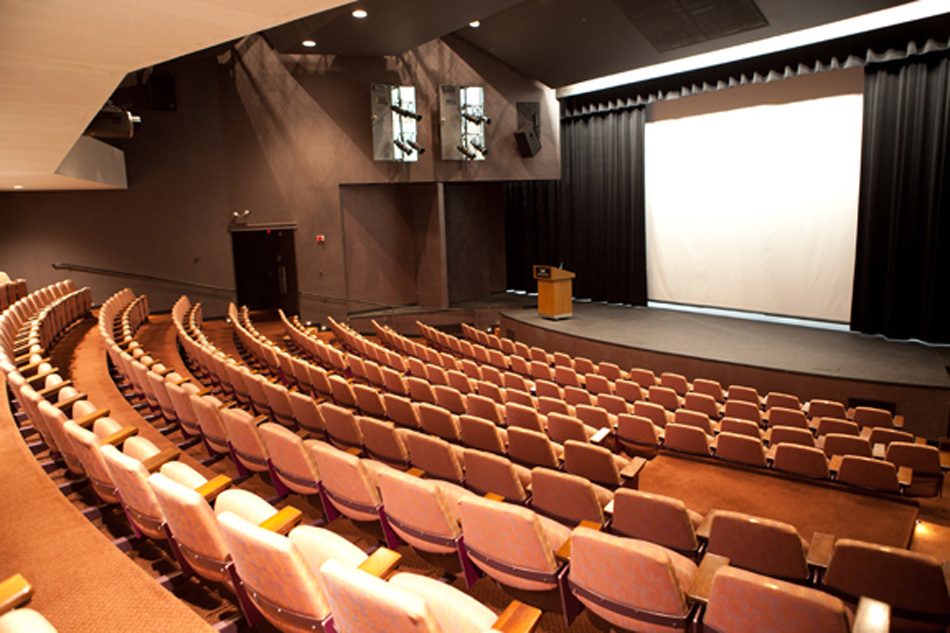
* Proscenium Arch: The "frame" through which the audience views the stage. It separates the house (audience) from the stage (performers).
* Wings: The off-stage areas hidden by curtains (legs) where performers wait and scenery is stored.
* Apron: The part of the stage that extends past the proscenium arch toward the audience.
5. Material Finishes
Materials are chosen for durability and fire safety as much as for their looks.
* Flooring: High-traffic areas usually feature low-pile commercial carpet to dampen the sound of footsteps, while the stage often uses sprung wood for performers' safety.
* Wall Cladding: Often finished in wood veneers or architectural fabrics to provide a warm, professional atmosphere.
* Upholstery: Chairs are typically upholstered in heavy-duty, fire-retardant fabrics designed to mimic the sound absorption of a human body so the room sounds the same whether it is full or empty.
6. Functional Zones
* The Control Booth: Located at the rear of the auditorium, usually at an elevated position, housing the sound and light boards.
* The Vestibule (Sound Lock): A small transition space between the noisy lobby and the quiet auditorium to prevent light and sound leaks during a performance.
Customizable Auditorium SolutionsOur AUDITORIUM INTERIOR package is tailored to suit various project scales, allowing clients to choose seating capacity, stage design, finishes, and more. Each design leverages advanced acoustic paneling and lighting to create an environment ideal for performances, presentations, or lectures.
Integrated Technology & Safety FeaturesFrom built-in wiring for sound systems to the use of fire safety-compliant materials, our interiors are equipped with innovative solutions. These features ensure the auditorium is both functional and secure, meeting all modern standards for comfort and safety.
End-to-End Professional ServicesWe provide a complete service-from design and manufacturing, right through to on-site installation by skilled professionals. Our surfaces enable easy maintenance, ensuring your auditorium remains in peak condition, supported by our expertise as manufacturers and service providers.
FAQ's of AUDITORIUM INTERIOR:
Q: How is the seating capacity determined for each auditorium project?
A: Seating capacity for AUDITORIUM INTERIOR projects is fully customizable, determined through a collaborative process with the client to meet specific spatial, functional, and audience requirements.
Q: What process is followed in the installation of AUDITORIUM INTERIOR?
A: Our team oversees every step, from initial design consultation to professional on-site installation. We handle acoustic paneling, lighting, stage setup, flooring, and sound system integration, ensuring a seamless experience.
Q: Where can AUDITORIUM INTERIOR solutions be implemented?
A: These solutions are ideal for all types of auditoriums-such as educational institutions, conference centers, or performing arts venues-offering flexibility to fit diverse locations and usage needs.
Q: What are the main benefits of the integrated acoustic paneling and lighting?
A: The advanced acoustic panels enhance sound clarity, eliminating echo or noise disturbances, while integrated lighting systems allow for adaptable ambience and focus, improving the audience and performer experience.
Q: When are fire safety standards addressed in your products?
A: Fire safety is prioritized from the outset, with materials and construction methods that conform to the latest fire safety standards, ensuring continual compliance and security for venue occupants.
Q: How is maintenance handled for the installed surfaces and systems?
A: Surfaces and installed elements are designed for easy maintenance, with durable finishes and accessible provisions, minimizing downtime and upkeep costs for venue operators.



 Send Inquiry

 Send Inquiry